Portfolio

Three works, from 2024 back to 2019. The first one we made together as HADALZONE, and two from the time we took turns directing and being each other’s dramaturg.

CHALLENGER DEEP

Where and when
2024, ArtEZ
Form
Visual, physical theatre performance
Concept and direction
Iris Jasmijn van Lieshout & Simon Lucker (HADALZONE)
Teaser, 41 seconds, with sound
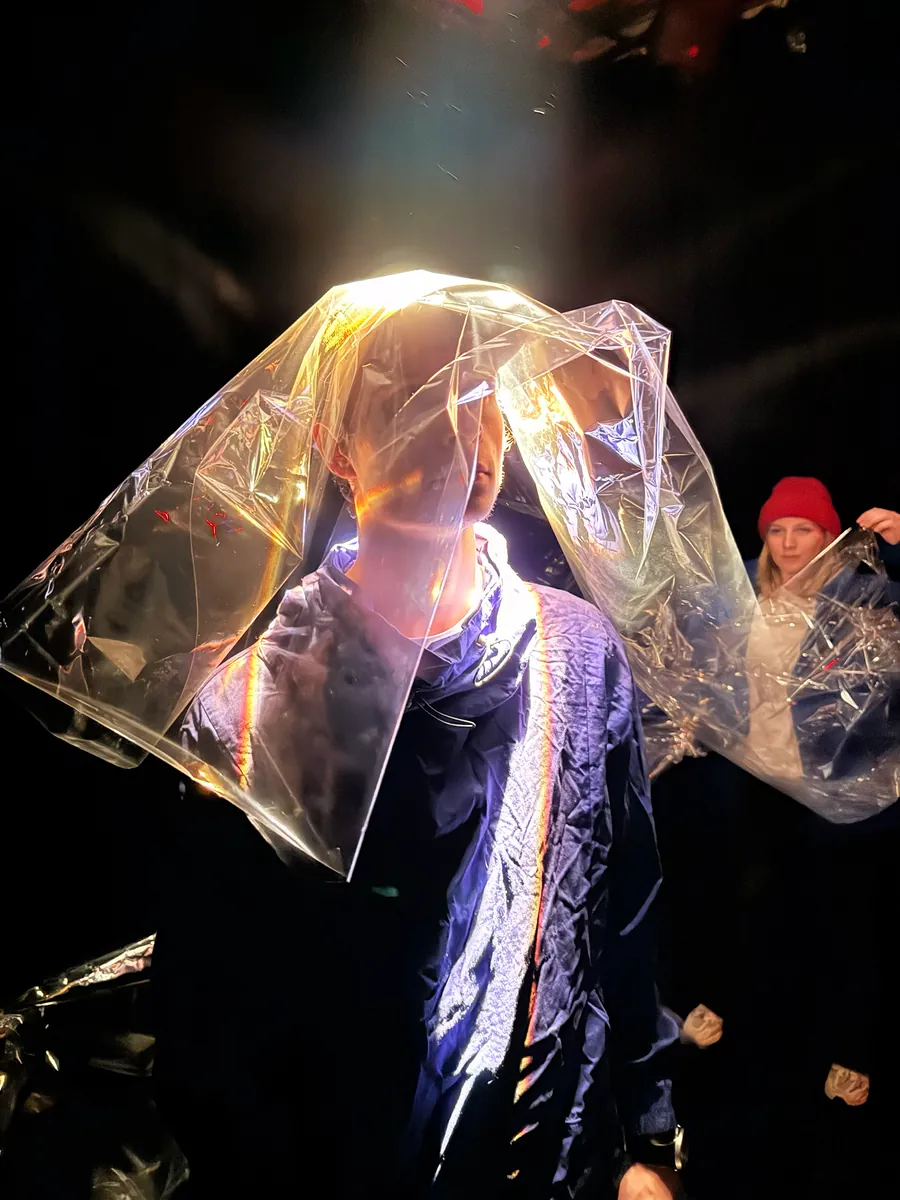
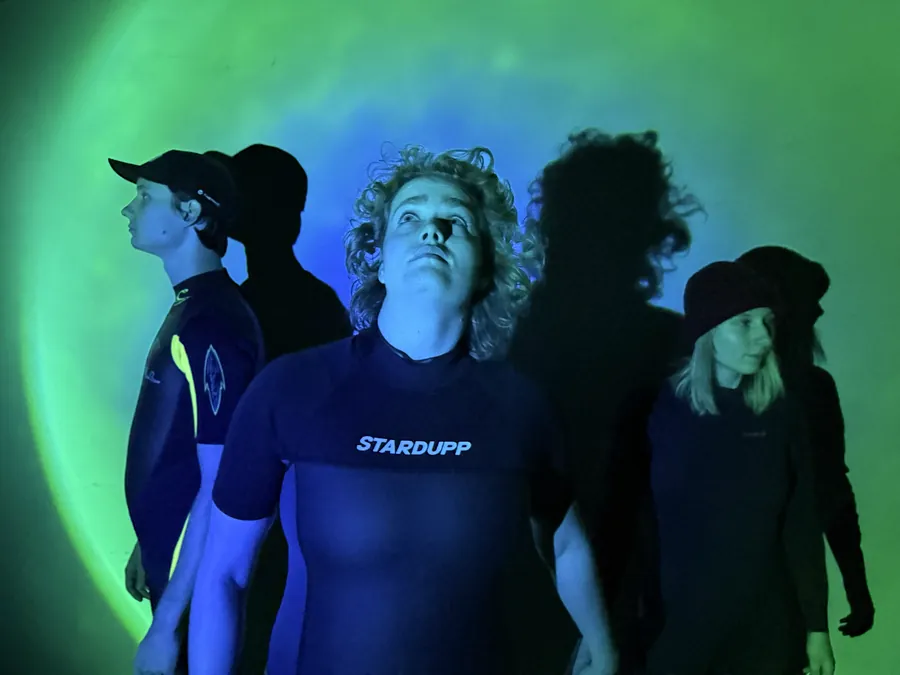
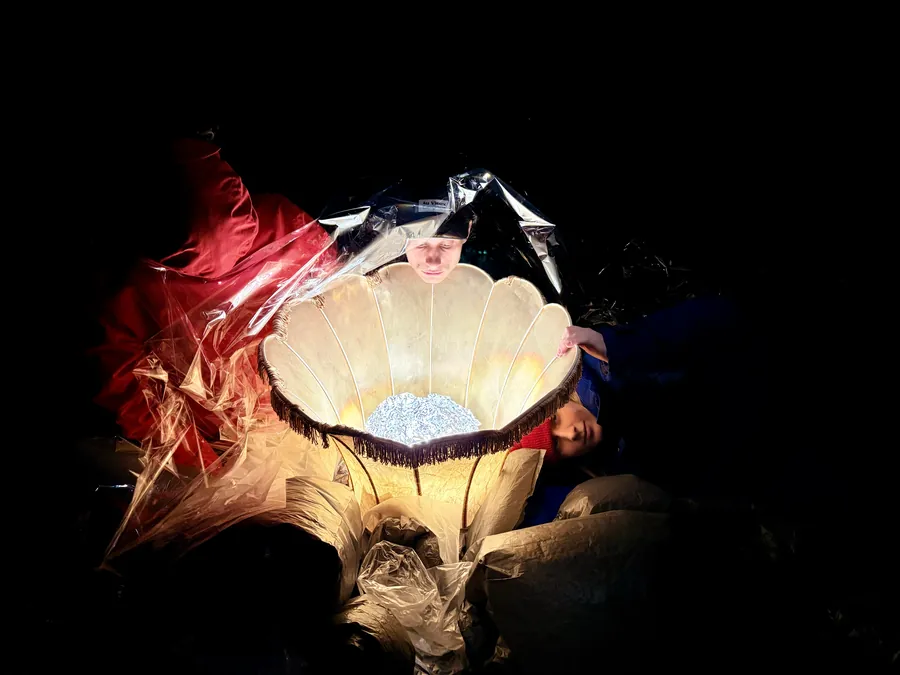
A face looks out above a shell-shaped lampshade lit from within, surrounded by red and silver foil in the dark.A performer under clear foil, lit from above in a dark room.Three performers in dark clothes in front of a wall lit green and blue, their shadows large behind them.

CHALLENGER DEEP is a short visual and physical performance that grew out of a shared fascination with the deep sea as a metaphor for the ambiguous and the amorphous. Performed for a small test audience of students and alumni at ArtEZ, the piece marked the start of a multi-year artistic inquiry into the layers of the ocean as a dramaturgical principle.

Where the deep sea escapes sight and understanding, CHALLENGER DEEP asked what hides beneath the surface: of the body, of language, of meaning. The performance used a physical visual language to make the unknowable and the formless tangible, and explored how dramaturgical structure itself can work as a layered, organic system: layer by layer.
VANITAS

Where and when
2019, CREA Theater, Amsterdam
Form
Theatrical video installation
Concept and direction
Iris Jasmijn van Lieshout
Dramaturgy and artistic advice
Simon Lucker
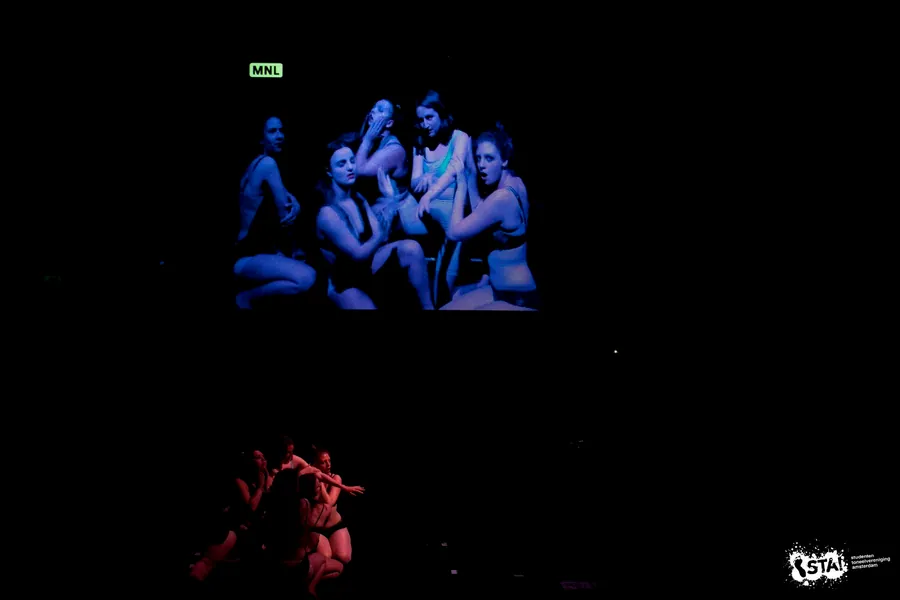
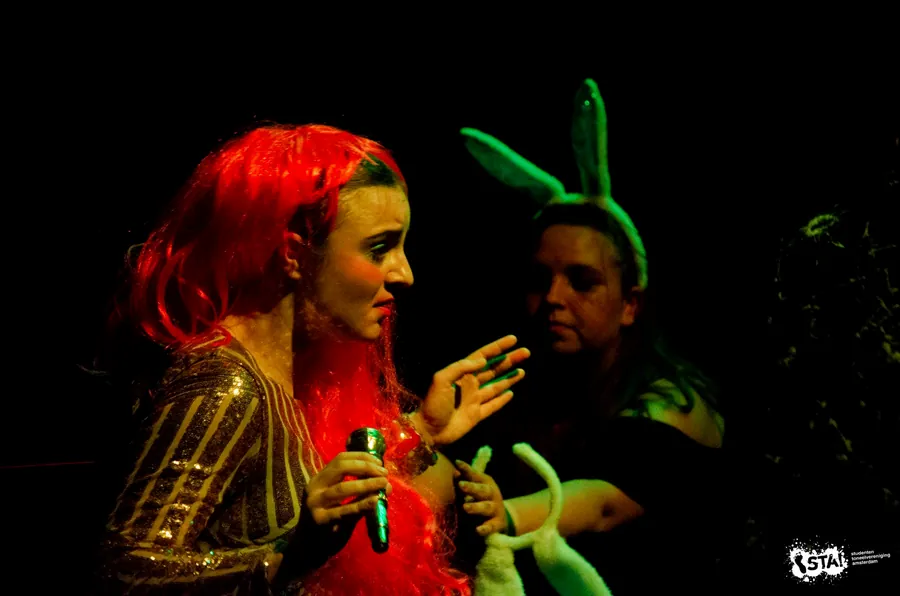
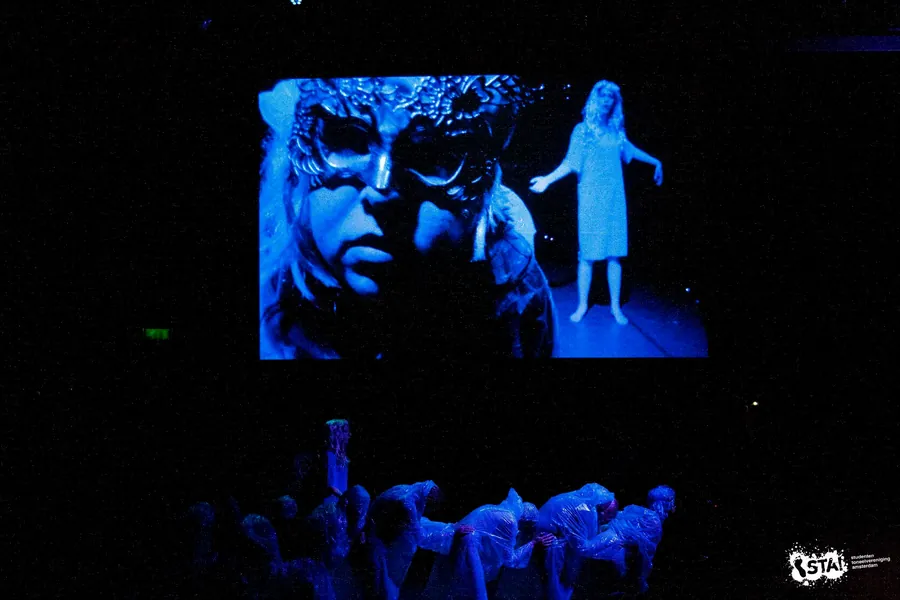
A performer in a bright red wig and gold jacket holds a microphone, next to a performer wearing green rabbit ears.A large blue video screen above the stage shows a face in close-up and a standing figure, with performers in blue light below.A dark stage with the video screen at the top showing a group of performers huddled together, and the same group lit red on the floor.

VANITAS is a multidisciplinary project about the search for validation and the urge to live the ‘perfect’ picture. At its centre stood a large video screen facing the audience, showing a live recording of what happened on stage. From the auditorium you saw the performers in profile at the side, while their actions, emotions and attempts at perfection appeared directly on the screen.

The video showed a carefully composed image, but slowly the mess and chaos on the stage beneath it broke through, making the tension between façade and reality visible. The piece followed a ‘scroll dramaturgy’: scenes and acts flowed into one another, each a new attempt by the performers to hold the audience’s attention.

It looked at ego, narcissism, online self-presentation, validation-seeking and the effects of digital culture on mental health. Music, video and performance came together in an experience where the audience could see both the carefully constructed perfection and the imperfection underneath: a direct confrontation with the human need for recognition and control over our own image.

PYTHON

Where and when
2019, ArtEZ, Arnhem
Form
Theatre performance
Concept and direction
Simon Lucker
Dramaturgy and artistic advice
Iris Jasmijn van Lieshout
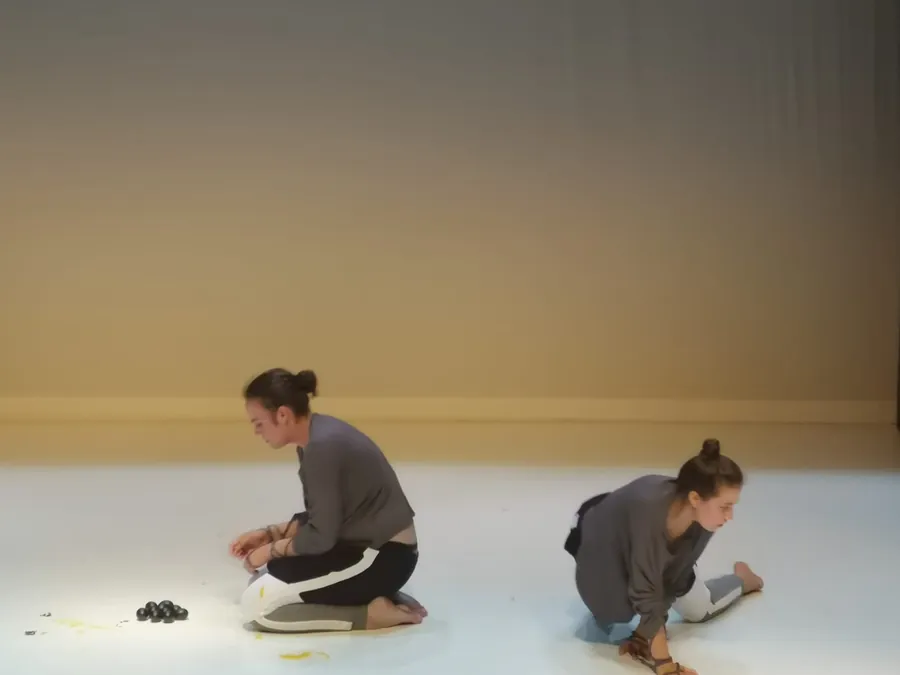
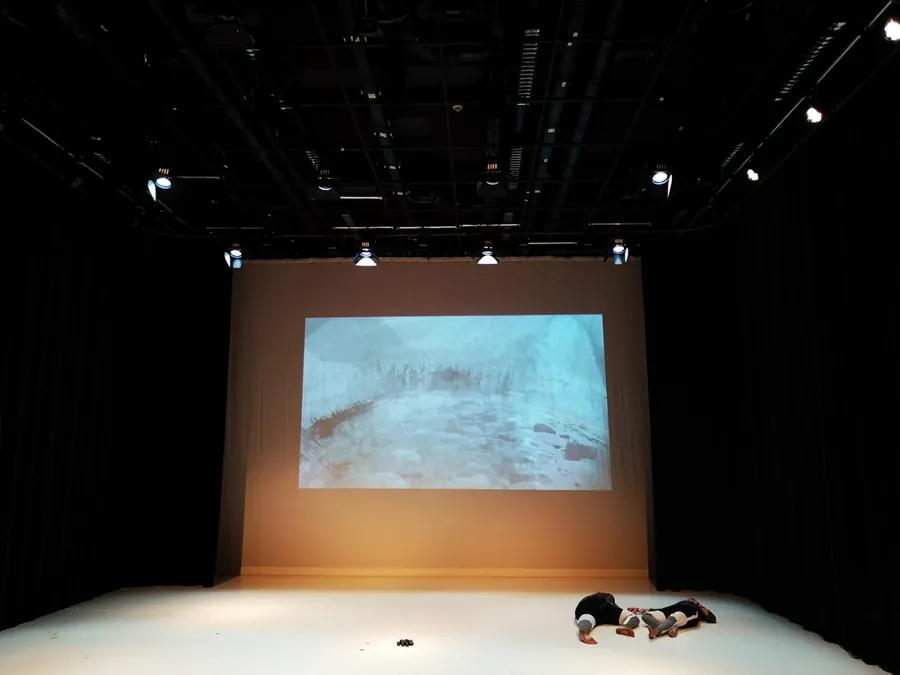
Two performers in grey jumpers kneel on a white floor in front of a pale wall, each bent over something small on the ground.A black box theatre with a projection on the back wall and a performer lying stretched out on the white floor.

PYTHON is a theatre performance for two actors, built on the dramaturgy of training an AI model. The performers carry out the same actions and text again and again, in a repeating structure that recalls iterations, loops and training rounds.

With every repetition the actors seem to become smarter, more precise and more self-aware. Small shifts in timing, intonation and physicality suggest that something is being learned: optimisation, pattern recognition, improvement. Slowly the performance moves from mechanical repetition to an inquiry into consciousness, autonomy and self-definition.

Along the way the performers realise what they are and which system they function in. Instead of striving for an end goal or a ‘better’ version of themselves, they make a radical choice: the training stops. PYTHON asks whether development always means progress, and whether optimisation is really desirable. The performance does not end in a climax but in a state of acceptance: nothing is better than whatever this is allowed to be.

Further down: In progress